


Secondary infertility: when those next babies are a struggle to conceive
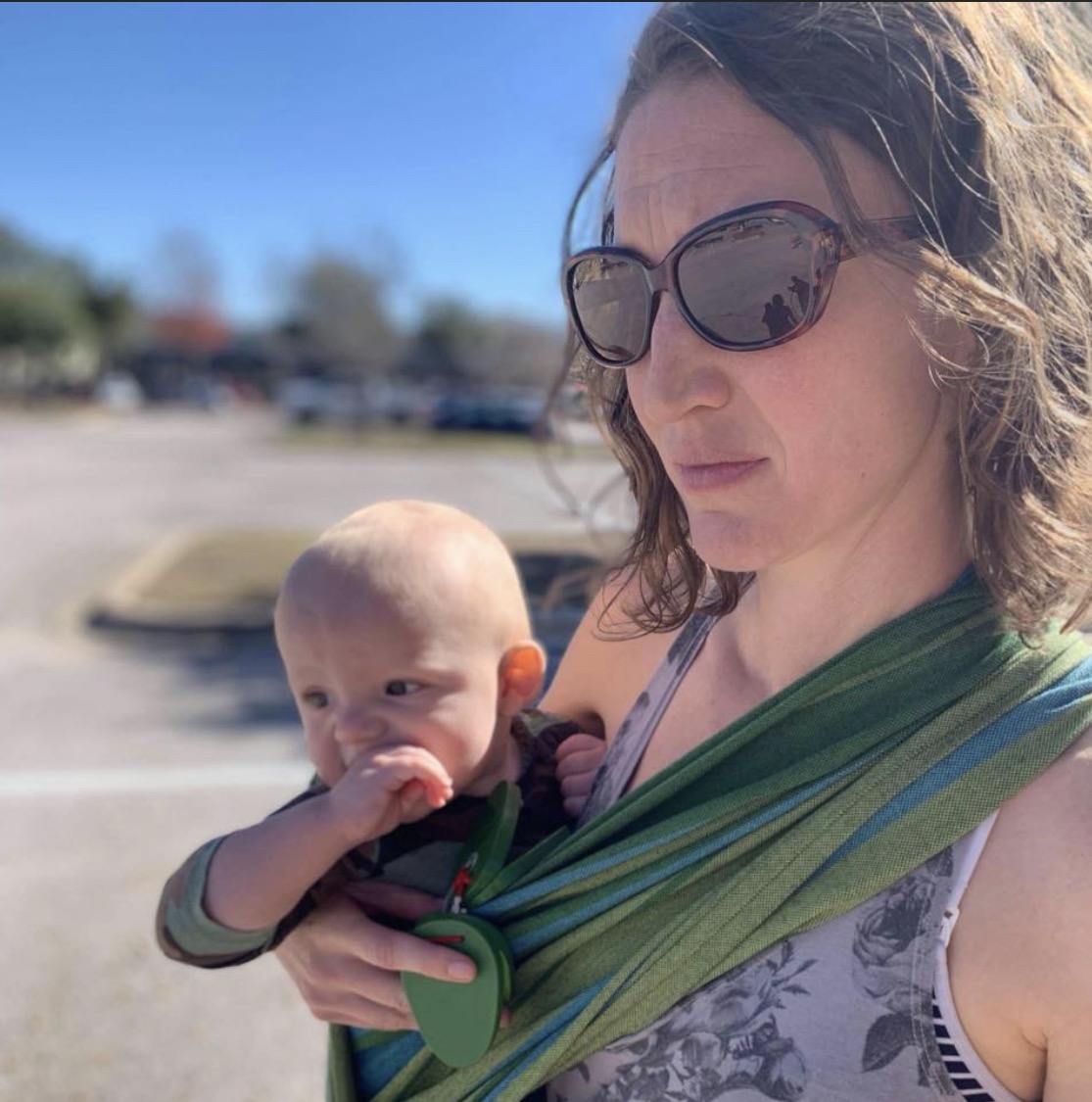
You had your first baby.
You know your body can become pregnant. You may have conceived relatively easily the first time. Maybe you weren’t even thinking much about fertility when you started trying again.
Then the months pass.
And suddenly you find yourself wondering:
Why isn’t this happening again?
Each luteal phase feels like years rather than a couple of weeks while you wait to take that test and wait for the dreaded period. Each ovulation you measure with ovulation stick, waiting for the perfect window to have sex. It’s so much. But youre told to relax and that it will happen in its own time, but you’re already 40 and everyone talks about how your window is closing…but relax!
This is where secondary infertility can feel particularly confusing and lonely. Having a child previously doesn’t guarantee that conception will happen easily the next time.
Fertility is not static. It can change with age, health, reproductive conditions, sperm health and circumstances between pregnancies. While there is absolutely room for hope, hope on its own is not a fertility strategy.
What is secondary infertility?
Secondary infertility generally refers to difficulty conceiving after previously achieving a pregnancy. The previous pregnancy may have been completely uncomplicated. You may have conceived naturally the first time. You may even have had another child only a few years ago.
That history is important, but it doesn’t tell us everything about your fertility today.
A fertility assessment should look at the whole picture: the whole cycle and its nuances, ovulation and sex timing, ovarian reserve, the uterus, fallopian tubes and sperm. When a male partner is contributing sperm, assessment of both partners should occur in parallel rather than assuming the problem is automatically on the woman’s side.
Why can secondary infertility happen?
There isn’t one single cause.
1. Age
Age is one of the most important factors affecting female fertility.
This can be particularly relevant in secondary infertility because the person trying for another baby is, by definition, older than they were during their previous pregnancy.
Female fertility declines with increasing age, with a more significant decline after 35. Ovarian reserve tests can provide useful information in the appropriate clinical context, but they don’t replace consideration of age and the overall clinical picture.
This doesn’t mean that pregnancy after 35 is impossible. It’s not. Some people have no problems and do, but it can happen. I had my first the year I turned 35, then had miscarriages at 38, 39 and finally had my last baby two months before I turned 42. But the crazy thing is we started trying again when my first was 19 months soooo that tells you how much I spent in ovulation sticks and relying on hope and taking advice like “just relax” or “it will happen when you least expect it”.
Being older than 35, 40 makes time a more important part of the conversation.
And it can be really annoying, but it’s an important part of the story and the journey so it needs to be discussed, but not beaten to death.
2. Ovulation may have changed
Cycles can change after pregnancy, breastfeeding, weight changes, illness, stress, thyroid disorders, PCOS and other hormonal or physiological changes.
Some people have very obvious irregular cycles. Others continue to have periods but may have changes in ovulation or the timing of their fertile window.
A menstrual history is an important part of fertility assessment, and additional testing may be appropriate depending on the cycle pattern and clinical history.
3. Tubal factors
The fallopian tubes need to be open and functional for natural conception to occur.
Previous pelvic infection, endometriosis, pelvic surgery, ectopic pregnancy and other conditions can affect the tubes.
This is one reason that simply continuing to try isn’t always the best approach.
Sometimes we need to ask:
Are the sperm and egg actually able to meet?
So this was my story. At 41 I said “I can’t do this anymore”. The hope the advice the everything was getting to me and I need led it to end. I decided to make sure I did everything I could investigation wise to know that I didn’t leave anything out. I had lived a healthy lifestyle, eaten all the right things, said all the right things, breather the right way, tracked my perfect cycle, had sex on the right days, everything but investigate the tubes. So I got a referral and went to see the ladies at Women’s Health Circle in Townsville and with a long appointment we found that my left tube was blocked. This was done with ultrasound and a intrauterine catheter that squirts aspirated saline into the tubes. On the third try we could see the saline go all the way around. Neat! I will talk more about this a bit later.
4. Endometriosis, fibroids, polyps and other pelvic factors
Conditions affecting the pelvis, uterus or ovaries can influence fertility. Some people have symptoms such as painful periods, pelvic pain, pain with intercourse or heavy bleeding. Others have surprisingly few symptoms. A pelvic ultrasound and further investigation can be useful when clinically indicated.
5. Sperm factors
This one is important.
If you’ve already had a child together, it can be tempting to assume sperm isn’t part of the equation. But sperm parameters can change over time too.
Male-factor infertility can contribute independently or alongside female factors, which is why guidelines recommend evaluating both partners rather than investigating only the woman. A semen analysis is an important part of the initial assessment.
And one semen analysis isn’t necessarily the whole story. Semen parameters can vary between samples, particularly when an initial result is abnormal.
So where do you actually start?
I like to think about fertility optimisation as building a picture rather than ordering a random collection of tests.
Understand your labs
Blood tests can be useful, but individual results shouldn’t be interpreted in isolation.
Depending on your history, this may include assessment of thyroid function, ovulation and ovarian reserve, among other investigations.
Importantly, more testing isn’t always better testing.
For example, ovarian reserve testing can help guide fertility treatment, but a low AMH does not automatically mean you cannot conceive naturally. Results need to be interpreted alongside your age, menstrual history, ultrasound findings and the reason the test was ordered.
Understand your tubes: the role of HyCoSy
A HyCoSy (hysterosalpingo-contrast sonography) is an ultrasound-based test used to assess whether the fallopian tubes are patent. This is what I was talking about earlier.
It can also provide information about the uterus and pelvic anatomy during the assessment.
For someone experiencing secondary infertility, particularly where there are risk factors for tubal disease, this can be an important piece of the puzzle.
Current evidence supports HyCoSy as a valid method of assessing tubal patency, with evidence suggesting comparable diagnostic capacity to HSG in appropriate settings. The choice between tests depends on the individual, clinical context, availability and clinician/patient preference.
It isn’t a test that everyone automatically needs on day one.
But if we’re asking why pregnancy isn’t happening, the tubes are worth considering.
BUUUUUUT…Don’t forget the sperm analysis
Fertility is a team sport.
What is pelvic physio fertility optimisation?
Pelvic physiotherapy isn’t about magically “fixing fertility”.
Rather, a fertility-focused pelvic physiotherapy assessment can look at the musculoskeletal and pelvic-floor factors that may be relevant to someone’s reproductive and sexual health as well as honing in on what your diet, stress, sleep are making you feel and we like to take a look at those blood tests and scans tos ee if they are optimal.
This may be particularly relevant if you experience:
pelvic pain
painful periods
pain with intercourse
pelvic-floor overactivity or tension
difficulty relaxing the pelvic floor
bladder or bowel symptoms
pelvic pain associated with endometriosis
scar or abdominal wall restrictions after surgery or birth
physical changes following pregnancy and birth
Pelvic-floor physiotherapy has evidence for helping conditions associated with pelvic-floor overactivity, pelvic pain and sexual dysfunction.
For fertility optimisation, the role is therefore best thought of as identifying and addressing relevant pelvic health issues, rather than promising that pelvic physiotherapy will increase pregnancy rates for everyone.
For some people, that may be an important part of preparing the body and reducing barriers to comfortable intercourse and pelvic function.
Recently I completely a case study with a 40 year old woman who had been TTC for over 12 months unsuccessfully. She has a low AMH and a thyroid issue. Over 5 weeks we worked through cycle tracking, diet, stress, sleep, and how to understand her lab results as well as education on the medical process of infertility. The point of the case study was to see if education would improve agency as well as self advocacy. We found that with this participant, it did. And a few months later, she got pregnant. Was it due to education: knowing the best time to have sex in the cycle, how to manage stress and get better sleep? Or was it just her time? Either way, our sessions helped her gain confidence to navigate the infertility world.
Cycle tracking: useful, but don’t let it take over your life
Understanding your cycle can help you understand when ovulation is likely occurring and when your fertile window falls.
The fertile window is approximately the six days ending on the day of ovulation.
Ovulation predictor kits and cervical mucus monitoring can help identify the fertile window. Intercourse every 1–2 days during the fertile window gives the highest pregnancy rates. This can be difficult if you have pelvic pain or your partner works away!
Back to the apps. They aren’t perfect.
An app predicting that you ovulate on “day 14” doesn’t mean your body has read the app.
Your cycle can change.
That’s why learning how to interpret your own signs can be more useful than blindly following a calendar.
And if tracking is making sex feel like a clinical appointment every month, that’s important too.
Optimisation shouldn’t come at the expense of your mental health.
We can work with this and educate you so you can choose the best route for cycle tracking.
What about diet?
Nutrition matters for overall health and preconception health. We need to be careful about fertility nutrition becoming another source of fear. There is currently insufficient evidence that one particular diet or macronutrient combination dramatically improves natural fertility in otherwise healthy people. A healthy, balanced diet is still worth pursuing for general health and pregnancy preparation. I like to follow a Mediterranean/ Nordic diet. It works well in our area of the world as people can easily find the ingredients to work into the diet.
But why recreate everything. Let’s work with what you are already doing, make small changes if necessary and see how your body reacts.
Sleep matters too
Sleep is another part of the bigger picture. Good sleep supports overall metabolic, hormonal and psychological health. The goal isn’t to achieve a perfect sleep score. It’s to look at what might realistically be improved:
Could you get more consistent sleep?
Are you chronically sleep deprived because of night waking with a young child?
Are you exhausted from balancing work, parenting and trying to conceive?
Sometimes fertility optimisation needs to recognise the reality of life with a toddler and not prescribe a perfect wellness routine that no parent can maintain.
When should you actually seek help?
This is where age matters.
Under 35
If you’re under 35 and have regular unprotected intercourse without conceiving, fertility assessment is generally recommended after 12 months.
35–39
If you’re 35 or older, assessment is generally recommended after 6 months of trying.
40+
If you’re over 40, it’s reasonable to seek fertility advice much sooner rather than waiting six or twelve months.
Don’t wait if something already concerns you
The timeline above isn’t a rule that says you must suffer for 6 or 12 months before asking questions.
Earlier assessment can be appropriate if you have:
irregular or absent periods
suspected or known endometriosis
previous pelvic infection or tubal disease
previous ectopic pregnancy
previous pelvic surgery
recurrent pregnancy loss
suspected male-factor infertility
a known condition that may affect fertility
concerns about ovarian reserve
sexual or erectile difficulties
This is already long enough. You are tired of reading and I’m tired of writing.
Fertility optimisation is a full body and mind approach to your fertility. It is not a guarantee, but I is an approach that allows you to sit with me to hear your whole story, look at all the blood tests, scans, and previous advice you have been given. This allows me to help you understand the options you have and what we can do to improve your fertility. I give you education to help you create agency and feel confident in your path whether this is through natural conception or through a medical assisted route.
I have spent the last year improving my education in fertility optimisation and in October will finally have earned my Pelvic Rehab Fertility Specialist Certification. Currently I am the first and only practitioner in Australia to have done this. This certification pathway has allowed me to not only have advanced training in fertility optimisation, but also has connected me with brilliant minds from all over the world with the same passion. So if I don’t know, I know someone who will!
Yours in fertility,
Dr Camille Rains- Physiotherapist
Novella Health- Whitsundays: Cannonvale, Proserpine, Bowen
This article is for general education and does not replace individual medical assessment or advice. Fertility investigations and treatment should be tailored to your age, medical history, reproductive history and goals.


Comments